
The Post is the Product
A Brief History of Rage-bait

A common occurrence of contemporary life is encountering a post so outrageously bad you wonder: WHY?

You think about it all morning, so much so, that you feel compelled to post about it in an earnest inquiry to your digital peers.
It’s most likely “rage-bait”, the Oxford Dictionary word of 2025, which they define as “online content deliberately designed to elicit anger or outrage by being frustrating, provocative, or offensive, typically posted in order to increase traffic to or engagement with a particular web page or social media content”.
Don’t do it: the post is the point, the post is the product.
I was revisiting Reggie James’ 2023 essay the New Technologist Manifesto and paragraph 13 struck me as highly relevant: “We live in an environment of narrative warfare. If we don’t shape the narrative, our enemy will.”
It reminded me of the concept of para-content or content about content. (Think reaction videos, quote tweets, stitches, the hot take economy.) Certain things you see online exist specifically to engender para-content, they exist solely as provocation, as pits of attention meant to be transfigured into content about the original post or wells of attention for you to waste your precious screen-time.

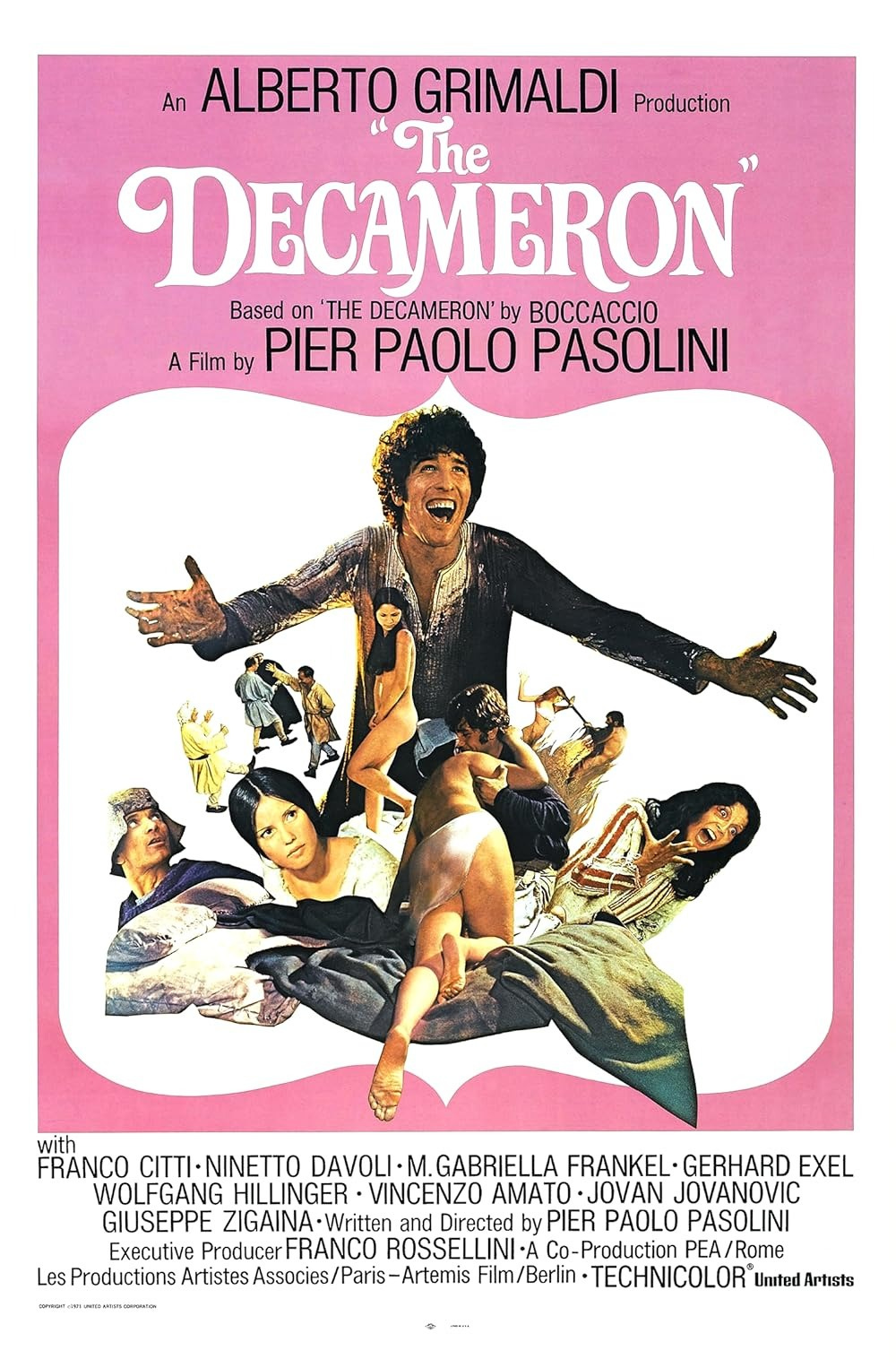
Historically, transgression was in service of audience shock. The French fabliaux (12th–14th c.) were short comic tales notorious for sexual and scatological content and for mocking the clergy and nobility. Many of which made their way into Giovanni Boccaccio’s infamous Decameron (1353), which most will know from the homonymous Pier Paolo Pasolini’s 1973 film. Many fabliaux did not have authors, they are folk tales, passed from town to town, some brought back from crusades. In the Middle Ages, these bawdy and transgressive texts thrived in a folkloric context, they were largely meant to entertain and mock human vices. Medieval life was difficult and chaotic and, though not inherently political, the fabliaux acted as mirrors of this disorder: the lascivious priest, the foolish peasants, the cuckold husband were all recurring tropes and characters amongst the stories.
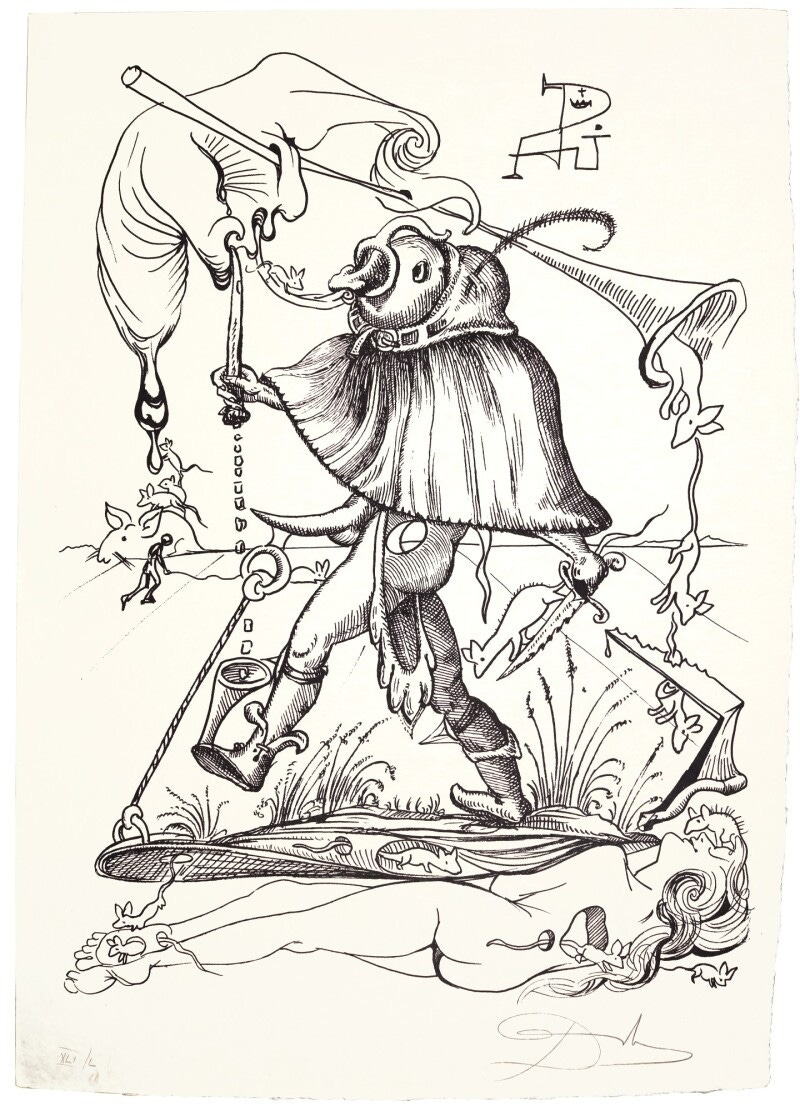
With the advent of the printing press, controversy found a new vehicle. Authors continued to push boundaries. In 1532, French writer François Rabelais published Pantagruel, a now-classic novel bursting with grotesque humor, sexual innuendo, and mockery of religious authority. It was an immediate popular success but also drew lots of outrage from theological authorities.
About a century later, in 1664, playwright Molière, Jean-Baptiste Poquelin, shocked the court of Louis XIV with his play Tartuffe which satirized religious hypocrisy. The play was so controversial that it was banned by the religious authorities who saw it as an attack on the “fundamentals of religion.” They even threatened to ban anyone who saw the play, an early example of trickle-down cancel culture.
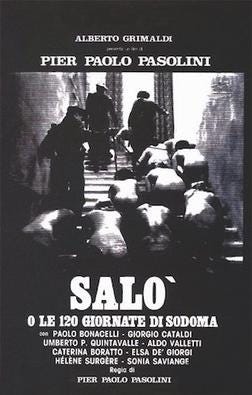
It is impossible to speak of literary shock with mentioning the Marquis de Sade. Sade spent many years in prison due to his sacrilegious and licentious behavior. He was living what he wrote, as they say. In 1785, in prison, he wrote 120 days of Sodom (which Pasolini adapted, as Salo), which was posthumously published in 1904. The book features all the sexual deviance you can imagine. The book was immediately banned and remained banned until the 1960s in France, the UK and the US. It did however spark conversation about censorship and freedom of speech. Bataille, Beauvoir, Beckett all wrote about Sade, with Simone publishing an essay entitled, “Must We Burn Sade?”
The 19th century’s mass media boom led to new forms of shock-oriented entertainment. In Britain, cheap serial publications nicknamed “penny dreadfuls” flooded the market with sordid tales of crime, violence, horror, and vice aimed largely at young working-class readers. These weekly pamphlets, available for only a penny (hence the name) featured blood-soaked highwaymen stories, tales involving vampires and other forms of sensationalism. Their popularity sparked periodic moral panics: by the 1880s, critics were loudly blaming penny dreadfuls for corrupting youth and pushed for their outright illegalization.
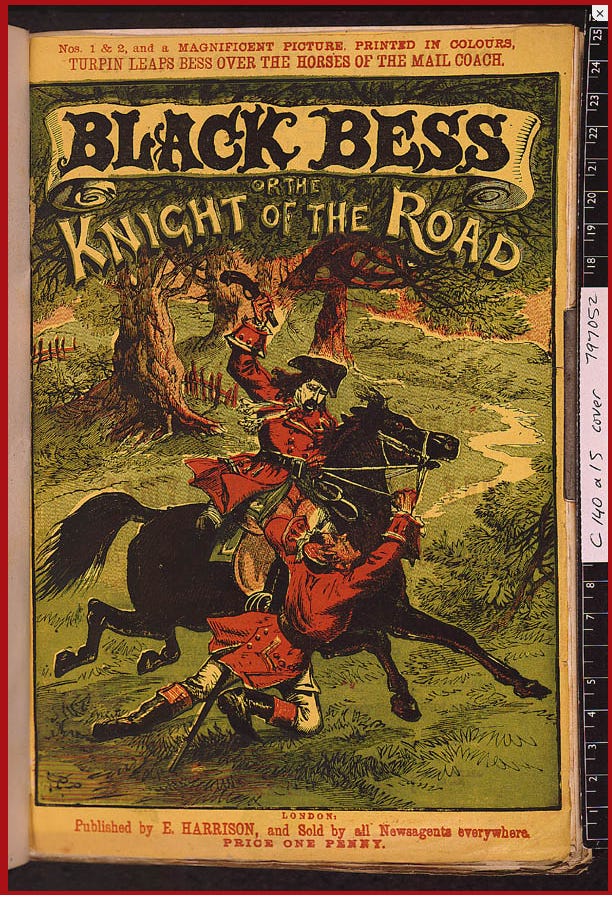
The Penny Dreadfuls were one of the first examples of shock-for-profit. Of course, in the 18th century, there were “Grub Street Pamphlets”, similar short form texts featuring crime and erotic stories, which were distributed, at the time, around public executions. Similarly, in France, during the woes of the Revolution, publishers stoked dissent with pamphlets deriding Marie-Antoinette and other religious and political figures.
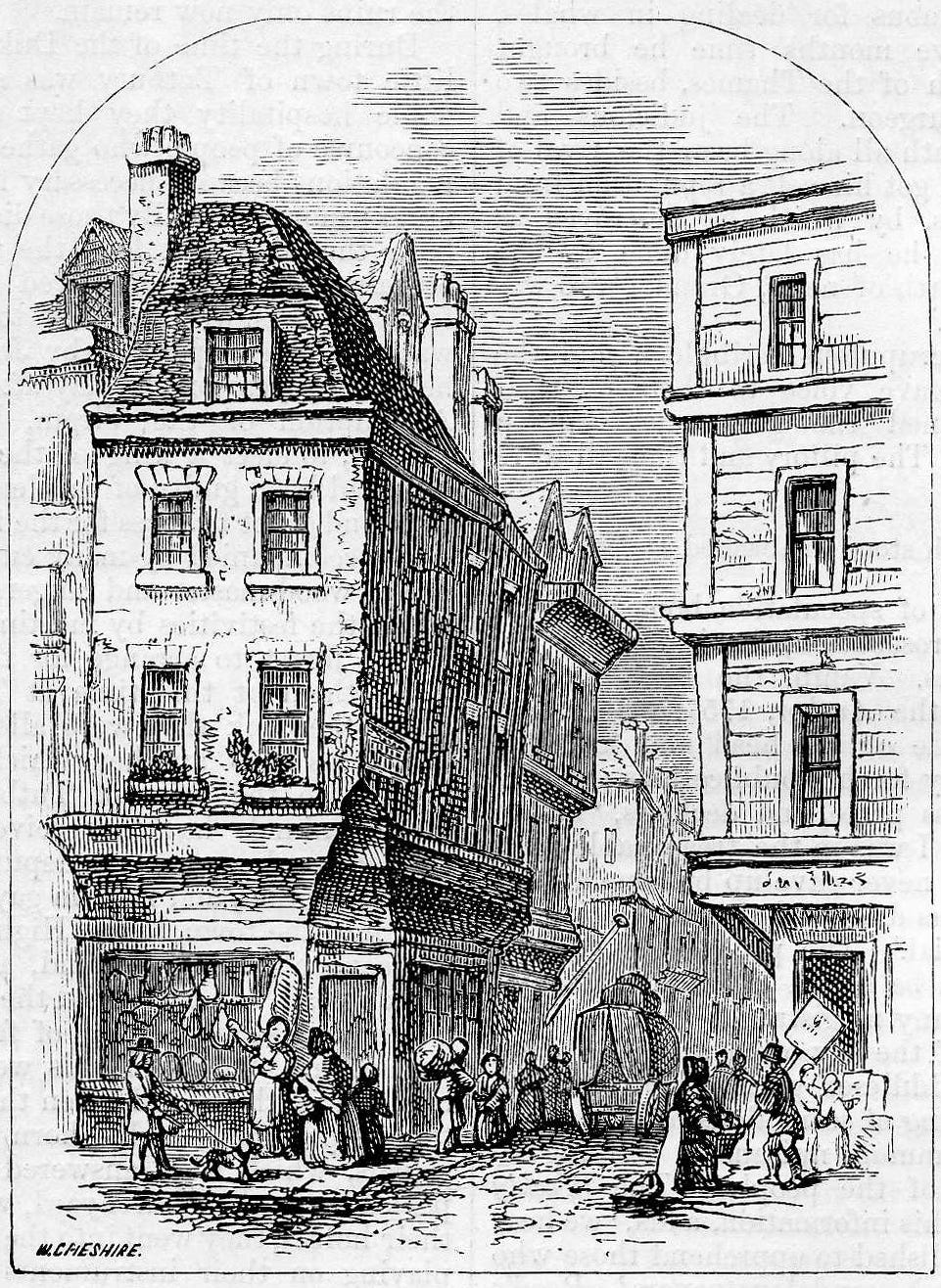
Penny Dreadfuls coalesced three elements which we can recognize in digital ragebait.
The publications were:
mass-market and serialized (they could be expected every week)
overtly commercial (the cost is in the name, their aim was to be sold) and
they were produced at industrial speed and volume while leveraging reader and public feedback (whatever topic sold more and generated more outrage led to more of it being produced, this engendered an escalation in content extremity, a shock arms-race, if you will).
This push for escalation is felt in the 20th century, especially in cinema. In the 60’s, grindhouse theaters, “[which mainly showed] low-budget horror, splatter, and exploitation films for adults”, being overtly commercial, began a similar arms-race for shock. After 1963’s Blood Feast, considered by most to be the first-ever “splatter film”, directors realized that shock was a selling point: the sicker the poster, the more word-of-mouth about the gruesomeness of a film there was, the more people would pay to see the film. So, the trend continued, and shock escalated.

In 1976, the movie Snuff was released in theatres. Infamously, the movie features an alleged “real” murder of one of the actresses. The film’s producers hyped this premise, public outrage ensued, the NY DA even opened an investigation which finally revealed that it was all a marketing ploy. But it worked. The movie was made infamous.

The history of transgressive media is marked by shifts in intent. In medieval and early modern contexts, shock often emerged as a byproduct of humor, folklore, or theological critique. In other words, its function was cathartic or satirical rather than commercial and strategic. As media forms professionalized, particularly with the advent of mass publishing in the 18th and 19th centuries, we witnessed a shift: transgression became instrumentalized. What was once incidental (an epiphenomenon of a deranged mind or a courageous truth-teller) became calculated. The aim was no longer to entertain or unsettle the medieval town folks, but rather provoke a response that could be measured, monetized, and replicated. Shock underwent a Fordian transformation, shock became industrialized.
The best representation of that industrialization of shock is with tabloids. Publications like The National Enquirer or The Sun pioneered the formula of moral panic, sexual scandal, and crime sensationalism packaged for mass circulation. Literally, they paid paparazzi and sources for images and stories to feed their scandal-engine and garner more viewership.
Before the Penny Dreadfuls, previous examples of shock-jockery fell within three categories of transgression:
transgression as satire
transgression for political conversation or
Parnassian transgression (pure artistic transgression or transgression for transgression’s sake).
In other words, the transgression served something other than its maker, at worst, it served their own perverse desires (in the case of Sade). Even in the latter case, the aim is more noble than the current use of transgression, i.e. garnering attention or “views”.
Every major escalation in shock corresponds with a change in technological infrastructure. The printing press democratized scandal, penny serials industrialized it, then, the camera recorded spectacle and made it visual, the VHS made obscenity portable and low-cost, etc. Technologies that reduced friction between production and distribution simultaneously raised the stakes for visibility. To compete in an environment of abundant proliferating content, creators turned increasingly to more bold provocation. (Remember Logan Paul in the Japanese forest?) The logic is simple: when the cost of publication drops, the cost of indifference rises, which, consequently, increases the value of Attention. Thus, ragebait grows.
Though it began with entertainment, many industries, such as politics and tech, now understand the physics of attention. They have shifted a lot of their marketing and communication efforts to the creation of materials that engender forms of shock and, often, the generation of para-content, rather than pushing the product or idea itself.
In a very Debordian way, this means that we are slowly retreating into the realm of pure spectacle, where for the launch of software, like Cluely (the cheat-on-everything AI) or Friend (the AI partner necklace), the thing that is actually sold, the thing that is actually marketed — in the words of Nick Susi — is our attention. That’s actually the product: it’s the attention. It’s not the software, it’s not the hardware, what the launches indicate to the market is the ability for these companies to capture our attention. Say it with me: the post is the point.
This is the subjugation of life itself to the post. As an industrialist, as the person making a product, as a business person, you now live in a world where the product is subsumed by the post: the product exists in service of the post.
In 12 months’ time, there will be no product. Because the product is pointless. The marketing exists only to create some vague differentiation, but the true differentiation is how we allocate our temporary attention to these products.
We are in an economy of narratives not an economy of products, in an economy of symbols not an economy of things.
Though it may seem like you are not tacitly acquiescing to the spectacle when you merely post and not purchase the product, make no mistake…
The purchase is not the point. The engagement is.
And so part of the resistance is in refusing to take the bait.
No engagement, no lingering, no sending it to friends to commiserate in private.
Do not engage.
Do not take the bait.
Because the bait itself is the product.
Our attention is the product.
The post is the product.
🤬🤬